The first schoolbook many children held was not a book at all.
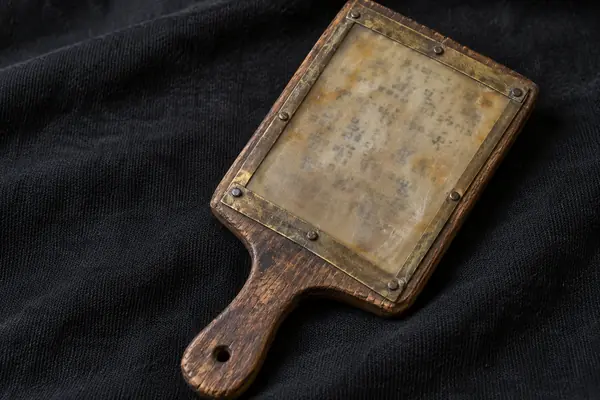
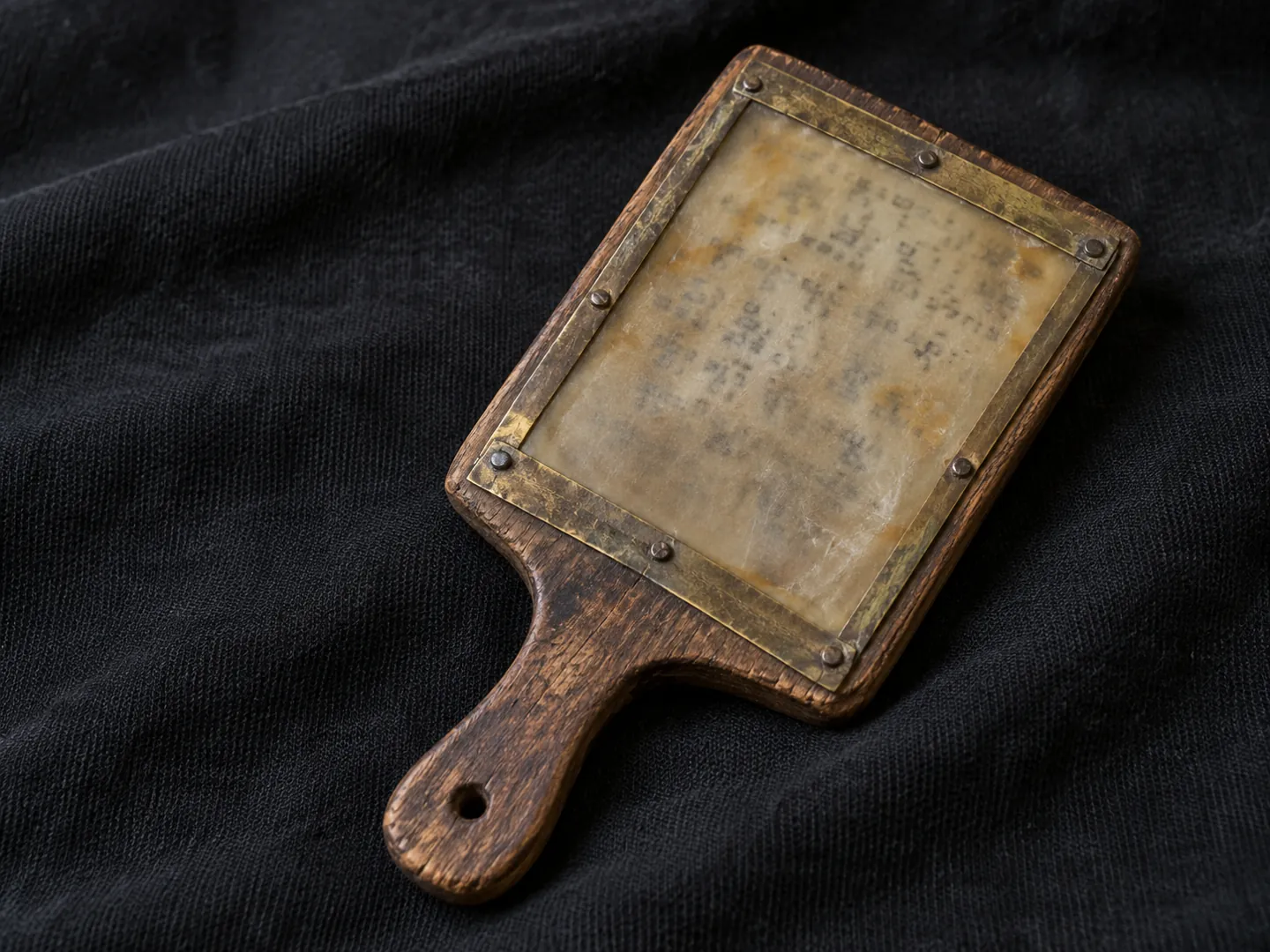
From the middle of the 15th century, English children learnt their letters from a hornbook: a small wooden paddle with the alphabet under a sheet of flattened horn. Pictures, columns and whole series of readers came later.
Pick an early learning book to see what it was and when it appeared. The bar shows how much it could hold, from a single sheet to a whole series.
Based on State Library Victoria, the Library of Congress, Ohio University and WKU Libraries. General history.
TWO NUMBERS WORTH KNOWING
Pictures on every page, copies by the million.
One figure from the 1658 picture book, one from the best-selling American readers.
150
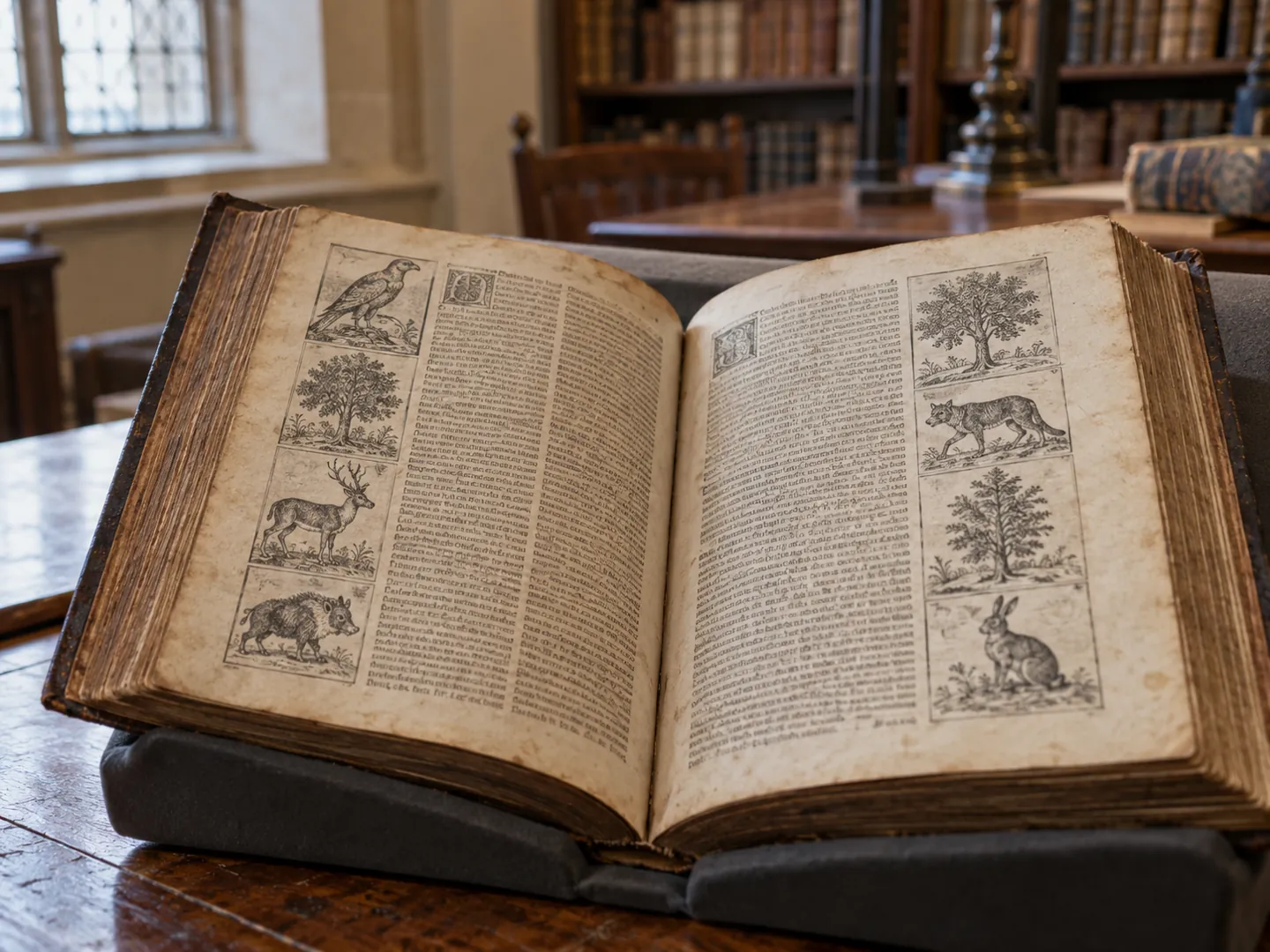
Woodcut illustrations in Orbis Sensualium Pictus
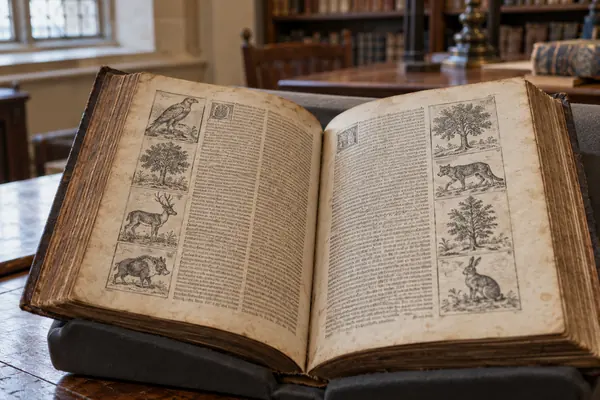
The 1658 book paired 150 woodcuts with parallel columns of text. The earliest English edition followed in 1659, and the book stayed in use for more than 200 years.
PICTURES · LIBRARY OF CONGRESS
≈ 120m
Eclectic Readers sold, 1836 to 1960
About 120 million copies were sold between 1836 and 1960. WKU Libraries adds that since 1961 they have sold some 30,000 copies a year.
COPIES · OHIO UNIVERSITY
The Library of Congress acquired a 1664 London printing of Orbis Sensualium Pictus in 2012.
WHAT CHANGED
Four ideas that still shape schoolbooks.
Today's textbooks still use ideas that appeared in these early books.
Make it durable
The hornbook's horn cover protected the lesson sheet from small hands.
Put pictures beside words
Orbis Pictus set an illustration next to each topic, with text in two languages side by side.
Build in steps
The Eclectic Readers came as a graded series of volumes rather than a single book.
Practise out loud
The Readers encouraged pupils to memorise and recite passages, including speeches from Shakespeare.
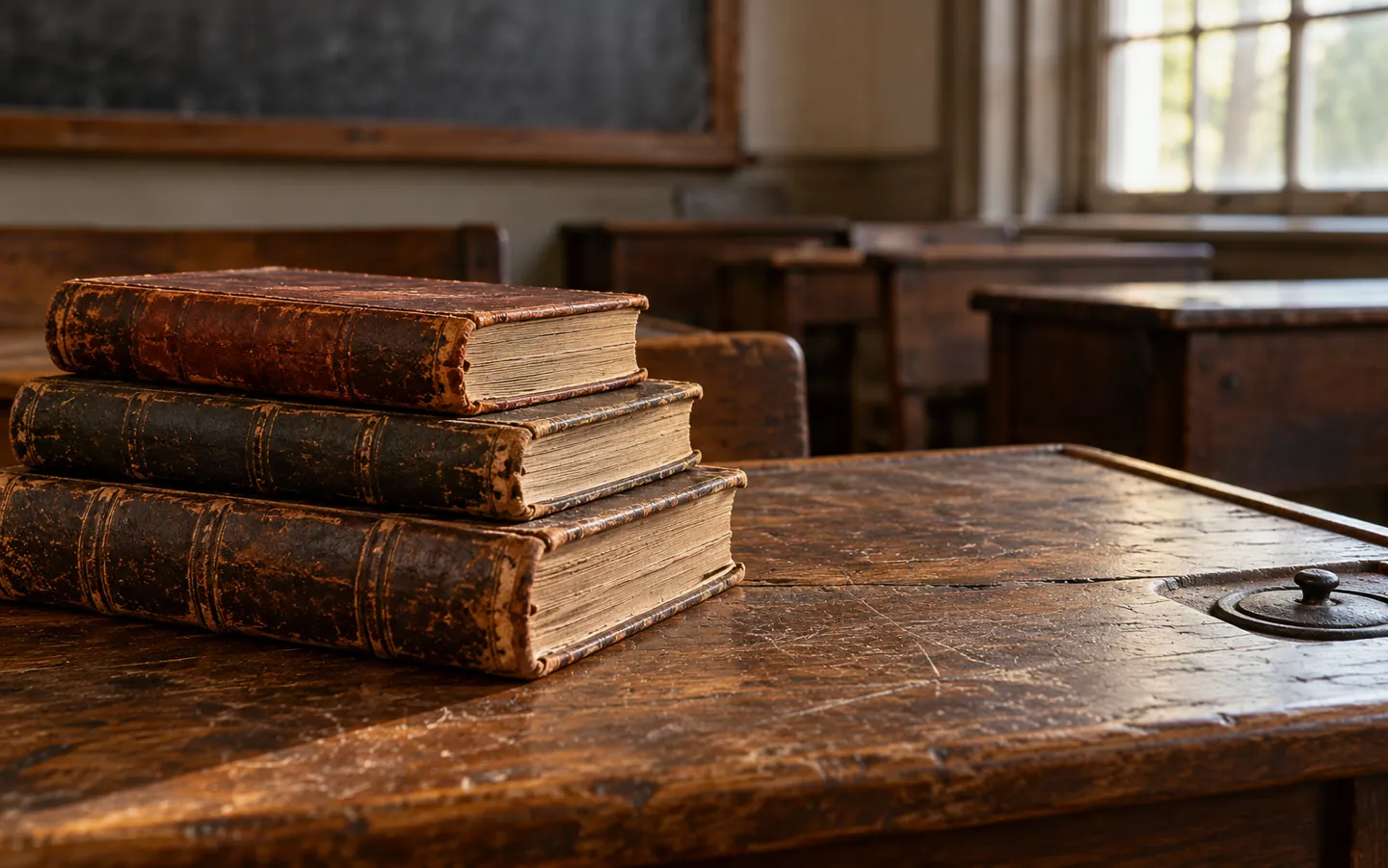
AI-generated image, not a photograph of a real person or place.AI-generated image, not a photograph of a real person or place.
FROM ALPHABET TO LITERATURE
Teaching to read, then reading to learn.
By the beginning of the 19th century, alphabet books no longer served only to teach the alphabet; publishers used them to teach and entertain as well, according to State Library Victoria's children's literature collection.
Ohio University notes that the Eclectic Readers mixed stories, poems, essays and speeches from many sources and helped popularise Shakespeare in American schools. Their content reflected the attitudes of their day, and they were revised in 1879.
Questions
Questions people ask
What is a hornbook?
A paddle-shaped wooden board used to teach children the alphabet. A printed lesson sheet was covered by a thin layer of flattened animal horn, held in place by metal strips.
What was the first children's picture book?
Orbis Sensualium Pictus, published in 1658, is considered the first children's picture book. It combined 150 woodcuts with parallel columns of Latin and a local language.
What is a battledore?
A folding paper version of the hornbook, developed in the middle of the 18th century. It folded into three, so it looked like a small book when closed.
How many McGuffey Readers were sold?
Ohio University says approximately 120 million copies were sold between 1836 and 1960, a figure matched only by the Bible and Webster's Dictionary.
Are the old readers still used?
WKU Libraries says some schools and homeschooling parents still use them, with sales of some 30,000 copies a year since 1961.